Introduction
Welcome to the definitive guide by Gas Care by Stove-Technica, Kerala’s premier provider of professional gas safety solutions. If you are building a new home or renovating your modular kitchen, this comprehensive breakdown will explain why upgrading to a fixed LPG pipeline is the most critical safety and design decision you will make.
If you’re seeking uncompromised safety, ultimate convenience, and lasting home value, here is a detailed breakdown of why you should choose a professionally installed LPG pipeline for your home.
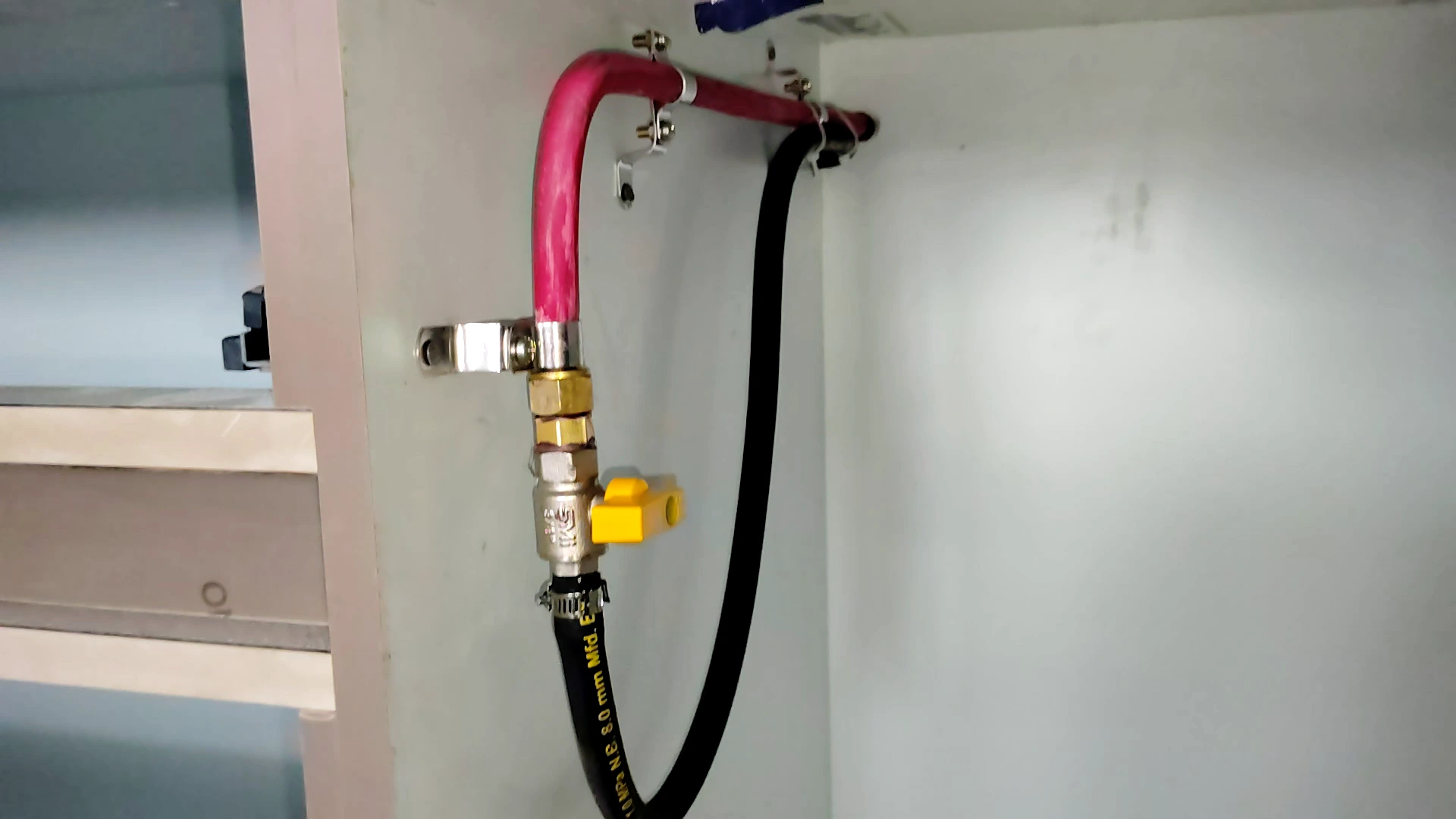
Gas Pipe Line Installation: The Essential Upgrade
For decades, the standard Indian kitchen featured a heavy, high-pressure LPG cylinder sitting directly under the cooktop, connected by a simple rubber hose. Today, as homeowners invest heavily in premium modular kitchens, that outdated setup is no longer acceptable.
Choosing a professional Gas Pipe Line Installation is more than just a utility upgrade; it is a fundamental shift from a risky, space-consuming legacy system to a modern, code-compliant infrastructure that protects your family and enhances your daily life.
Here is the exhaustive breakdown of why an engineered LPG pipeline is the foundation of a modern home.
The Foundation of Uncompromised Safety
The primary driver for upgrading to a piped gas system is absolute, uncompromising security. A professional installation is engineered to eliminate the inherent dangers of storing highly pressurized, flammable gas indoors.
- Zero Accumulation Risk: The core philosophy of a safe gas line is moving the cylinder permanently outside into a secure, ventilated Outdoor Gas Cage. Because LPG is heavier than air, an indoor leak pools along the floor, creating a massive explosion hazard. By keeping the cylinder outdoors, any potential leak immediately dissipates into the open breeze, neutralizing the risk of hazardous indoor gas accumulation.
- Eliminating the Rubber Hose Hazard: Standard rubber “Suraksha” hoses degrade over time due to ambient kitchen heat, oil spills, and general wear. They are also highly vulnerable to rodent bites. A professional installation routes the gas through durable, fixed copper, Mild Steel (MS), or composite (Jindal MLC) pipes.
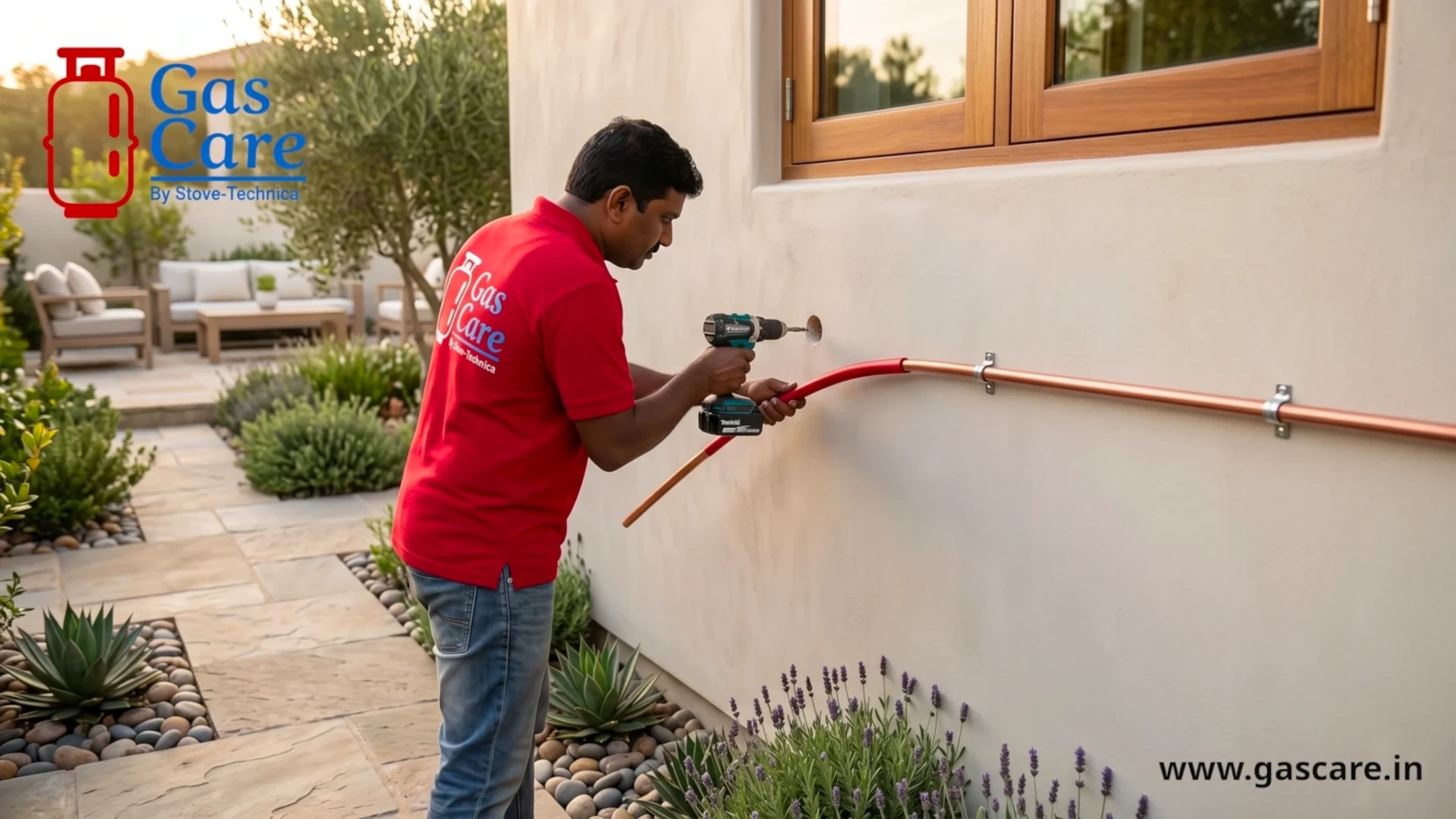
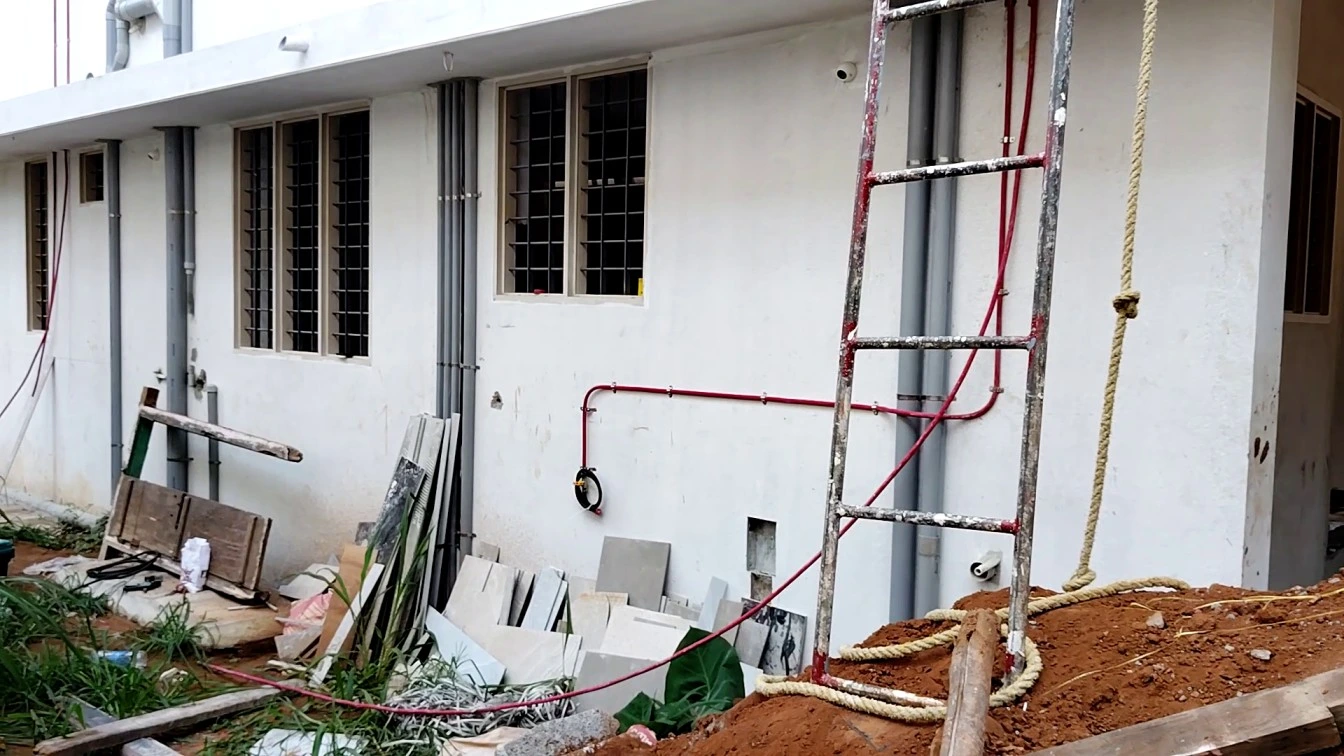
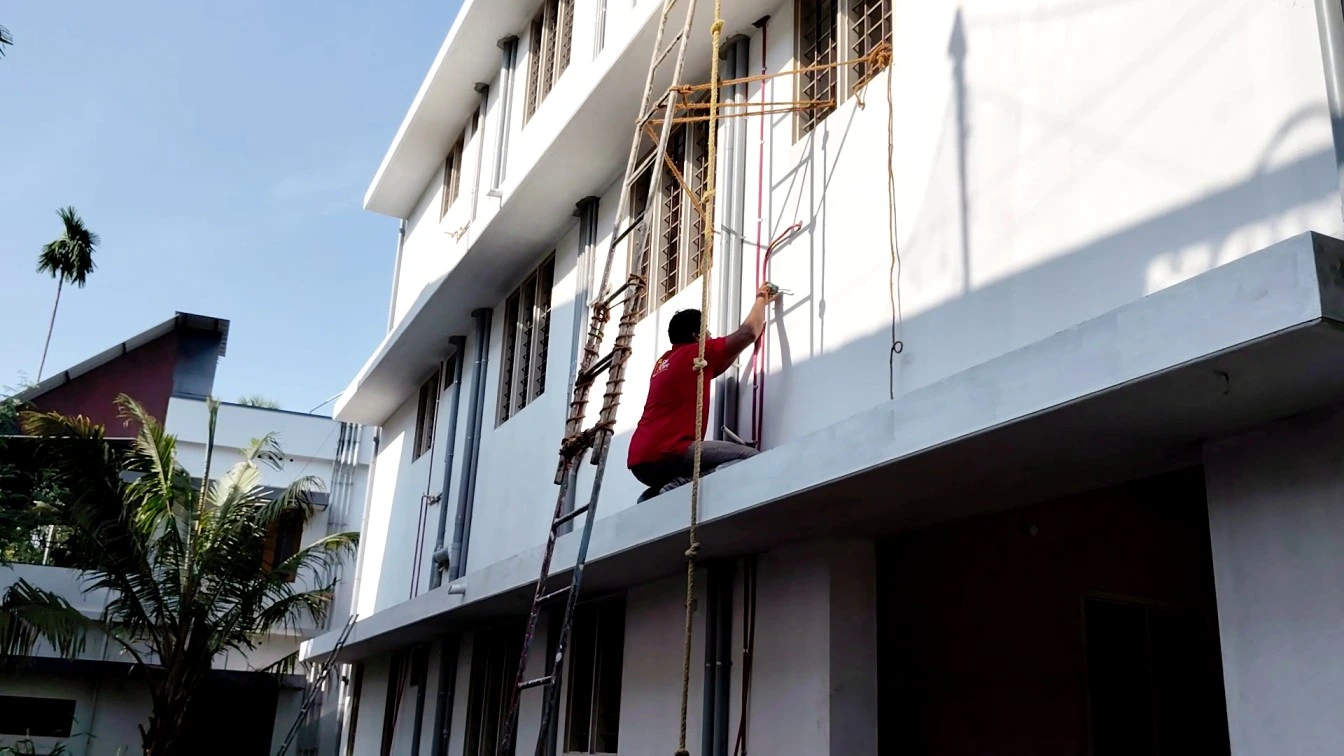
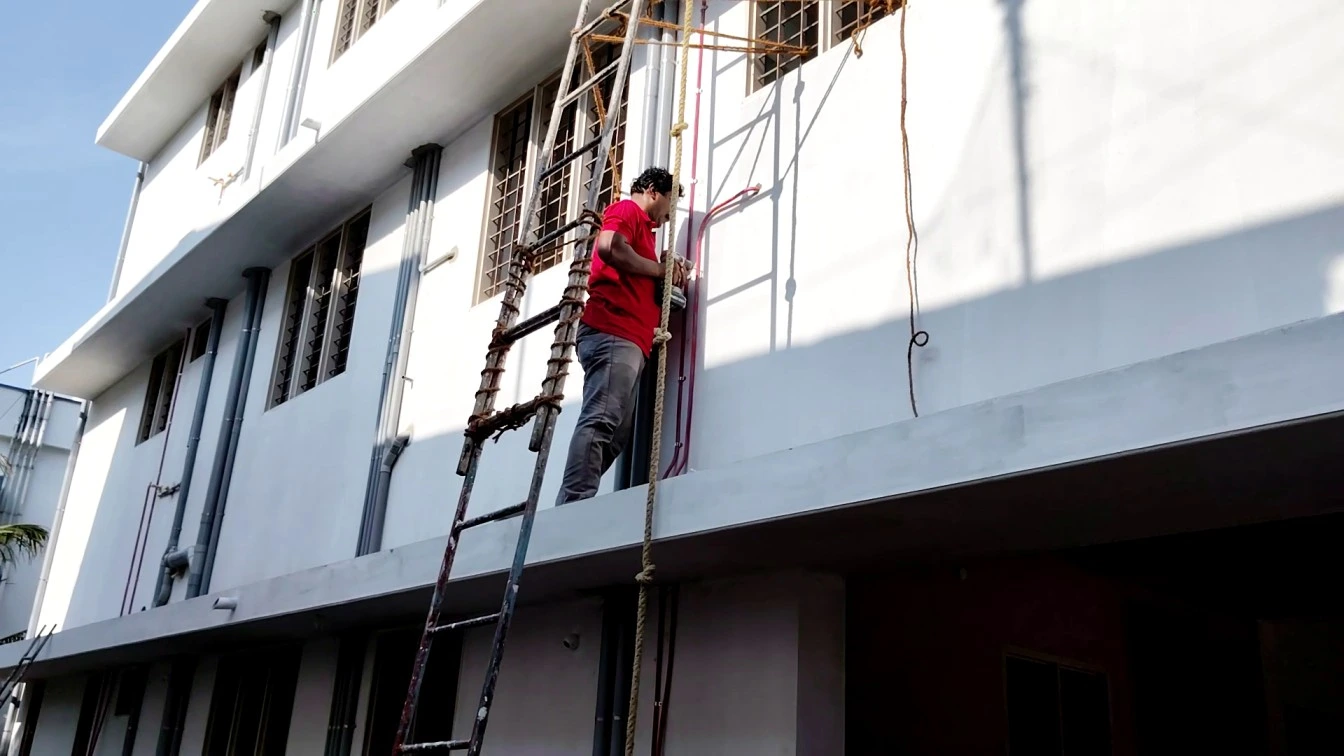
- Stainless Steel Clamping Security: For installations requiring flexible routing along exterior walls, the pipeline is fixed completely and tightly to the wall using heavy-duty stainless steel clamps. This guarantees continuous structural support, prevents sagging, and ensures the pipeline cannot be snagged or damaged by physical impact.
Maximizing Modular Kitchen Aesthetics and Home Value
A modern Kerala home demands clean lines, efficient workflow, and the protection of expensive interior finishes. A piped gas system is a non-negotiable element for achieving a contemporary look and safeguarding your renovation investment.
- Clutter-Free Kitchen Design: The bulky LPG cylinder is entirely removed from your floor plan. This instantly frees up an entire lower cabinet space that can be utilized for deep drawers, pull-out organizers, or an integrated waste bin. This allows your modular kitchen to achieve the pristine, minimalist aesthetic your architect designed.
- Protecting Expensive Finishes: Dragging heavy steel cylinders across the kitchen floor is the leading cause of deep scratches, chipped floor tiles, and permanent rust rings. By handling the cylinder exclusively outside, the system safeguards your premium marble, granite, and imported wooden flooring, directly protecting the financial value of your interiors.
- Future-Proof Real Estate Value: A fully compliant, fixed Gas Pipe Line Installation is highly valued in the modern real estate market. It immediately signals a premium, safety-conscious property, making your home significantly more attractive to future buyers.
The Logic of Ultimate Convenience
A Gas Pipe Line Installation simplifies your household management by removing all the logistical, physical, and dirty hassles associated with traditional cylinder management.
- Guaranteed Uninterrupted Supply (Dual-Cylinder System): Say goodbye to the panic of running out of gas while cooking for guests! Our advanced systems utilize a dual-cylinder setup manifold equipped with an automatic switchover regulator. When your primary cylinder empties, the valve instantly and seamlessly switches to the reserve cylinder. Your cooktop flame never dies, ensuring 100% uninterrupted cooking.
- Zero Lifting & Hassle-Free Delivery: The 14.2 kg domestic LPG cylinder is incredibly heavy and physically straining to move. With an outdoor system, your family never has to lift or handle a cylinder indoors again.
- Maintaining Home Privacy: Delivery agents simply swap the empty cylinder at the Outdoor Gas Cage located near your driveway or gate. This prevents delivery personnel from tracking mud, dirt, or rainwater through your clean house, preserving both your home’s hygiene and your family’s privacy.
In previous part, we established why removing the high-pressure cylinder from your kitchen is the ultimate safety and aesthetic upgrade. Now, we dive into the engineering, the materials, and the real-world economics of installing a gas pipeline in your home.
Technical Superiority: Choosing the Right Pipeline Material
Not all gas pipelines are created equal. Upgrading from a rubber hose to a professional pipeline requires selecting the right material for your home’s specific architecture. At Gas Care, we specialize in the two most highly rated, BIS-compliant materials for residential installations:
A. Brazed Copper: The Architectural Gold Standard
For new constructions or high-end luxury villas, brazed copper is the ultimate permanent solution.
- Extreme Durability: Copper boasts incredible tensile strength and fire resistance. It does not degrade, crack, or rust over time.
- Leak-Proof Brazing: Our technicians use high-temperature brazing to fuse the joints, creating a permanent, seamless metallic bond that is virtually indestructible and 100% leak-proof.
- The Lifespan: A properly installed copper gas line is a generational asset, designed to outlast the building itself.
B. Jindal MLC (PE-AL-PE): The Modern Retrofit Champion
If you are renovating a furnished apartment or an existing modular kitchen, welding copper might not be practical. This is where the Jindal Multi-Layer Composite (MLC) pipe excels.
- The EZ-Fit System: Jindal MLC uses a central aluminum core sandwiched between high-density plastic. It is installed using a cold, heat-free compression system (EZ-Fit), completely eliminating the need for open flames or welding inside your home.
- Supreme Flexibility: Because it is highly flexible, it can be routed around tight corners and through complex cabinet spaces with zero joints. Fewer joints mean a mathematically lower risk of leaks.
- Rust-Proof & Rodent-Proof: The outer plastic layers are entirely immune to coastal humidity and rust, while the solid aluminum core prevents rats from chewing through the line.
Built-in Scalability: Managing Multiple Kitchens
A unique and highly practical feature of modern Kerala architecture is the dual-kitchen setup: a pristine “Main Kitchen” for light prep and entertaining, and a heavy-duty “Work Area” for intense daily cooking.
Managing separate LPG cylinders for both areas is a logistical nightmare. A professional Gas Pipe Line Installation is built for seamless scalability.
- The Centralized Hub: We install a single, high-capacity Outdoor Gas Cage (typically housing two or four cylinders with an automatic switchover valve).
- Multi-Point Distribution: From this single secure hub, the fixed pipeline is precisely engineered to split and route gas to multiple cooktops, hobs, or even outdoor barbecue grills simultaneously.
- Uniform Pressure: Using advanced pressure regulators, we ensure that whether you are boiling milk in the Main Kitchen or operating a high-BTU burner in the Work Area, both stoves receive a safe, consistent, and identical flow of gas without pressure drops.
The 2026 Economics: What Does It Cost?
A common misconception is that a professional gas pipeline is a prohibitive luxury. In reality, it is a highly cost-effective, one-time investment that protects the massive capital you have already poured into your modular kitchen.
While precise quotes depend on the linear footage of the pipe required and the complexity of the routing, here is a general breakdown of the economics in Indian Rupees (INR):
- The Baseline Investment: A standard residential installation—covering the outdoor manifold, the automatic switchover regulator, high-grade copper or MLC piping, and expert installation labor—typically ranges between ₹8,500 and ₹15,000.
- Material Variations: Opting for the premium, brazed copper system sits at the higher end of the spectrum due to raw material costs, while the Jindal MLC system offers a highly secure, slightly more budget-friendly alternative.
- The Hidden Savings: Standard rubber hoses must be replaced frequently, and interior cabinet damage from cylinder dragging often requires expensive carpentry repairs. A fixed pipeline incurs zero maintenance costs and preserves your interior finishes indefinitely.
Why the Kerala Climate Demands Premium Gas Piping
Building and renovating homes in Kerala comes with a unique set of environmental challenges. Our intense monsoon seasons and high coastal humidity are the natural enemies of standard building materials.
When it comes to your gas infrastructure, using cheap Mild Steel (MS) piping is a recipe for disaster. MS pipes rapidly oxidize and rust in humid environments, leading to microscopic pitting and eventual gas leaks. This is exactly why Gas Care by Stove-Technica strictly advocates for Brazed Copper or Jindal MLC pipelines. Copper forms a natural, protective patina that completely resists coastal corrosion, while the high-density plastic outer layers of an MLC pipe make it 100% waterproof and rust-proof. Investing in the right material ensures your pipeline easily survives decades of heavy Kerala monsoons.
The Gas Care 3-Step Home Safety Audit
While a professional copper or composite pipeline is virtually maintenance-free compared to a rubber hose, practicing basic safety vigilance is the hallmark of a smart homeowner. We recommend performing this simple 3-step audit every six months:
- The Soap Water Test: Never use a lighter or match to check for leaks! Mix a few drops of dish soap with water and sponge it over the joints near your cylinder and cooktop. If you see active bubbling, turn off the cylinder immediately and call our technicians.
- Clamp and Alignment Inspection: Over time, heavy building vibrations or nearby construction can slightly shift utility lines. Walk the length of your exterior pipeline and visually inspect the heavy-duty stainless steel clamps. Ensure they are still holding the flexible piping completely and tightly against the wall without any sagging.
- Regulator Lifecycle Check: While the pipeline lasts for decades, the pressure regulator attached to your cylinder has a mechanical lifespan. Check the manufacturing date stamped on your regulator; safety standards dictate it should be replaced every 5 years to ensure optimal pressure control.
Navigating Distributor Compliance and BIS Standards
A major concern for homeowners upgrading their kitchens is whether a fixed pipeline violates the terms of their LPG provider.
The reality is that major distributors like Indane, Bharat Gas, and HP Gas highly encourage the transition away from indoor cylinders due to the massive safety benefits. However, the installation must be strictly code-compliant. At Gas Care, every installation adheres strictly to the Bureau of Indian Standards (BIS). Whether utilizing IS-certified copper or gas-rated IS 17544:2022 composite pipes, our engineered systems ensure that your home easily passes any safety audit conducted by your gas agency or fire insurance surveyor.
The Expert FAQ: Everything You Need to Know About LPG Piped Gas
When upgrading a home with a modern gas infrastructure, homeowners naturally have questions about safety, compliance, and daily usage. Here are the most frequently asked questions we receive at Gas Care, answered by our expert technicians:
Q: Why is a Gas Pipe Line Installation considered the absolute safest way to manage LPG at home?
A: The fundamental safety principle of a piped installation is isolation. By completely removing the high-pressure LPG cylinder from your living space and storing it in a ventilated Outdoor Gas Cage, you prevent any dangerous gas from accumulating indoors. Because LPG is heavier than air, an indoor leak can pool on the floor and create an explosion risk. Keeping the cylinder outside neutralizes this primary hazard instantly.
Q: How does the system guarantee I will never run out of gas while cooking?
A: Our systems are designed with a dual-cylinder manifold setup equipped with an automatic switchover regulator. When your active cylinder is depleted, the regulator senses the pressure drop and instantly reroutes the gas flow from the full reserve cylinder. This provides a continuous, uninterrupted supply, entirely eliminating the stress of mid-meal run-outs.
Q: Will installing a pipeline damage my new modular kitchen aesthetics?
A: No, it does the exact opposite. By removing the bulky cylinder from your floor plan, the system actually frees up valuable lower-cabinet space and eliminates visual clutter. The pipeline itself can be routed discreetly behind cabinets or within false ceilings. Furthermore, it protects your expensive flooring and tiles from the deep scratches and rust rings caused by dragging heavy steel cylinders.
Q: I have a “Main Kitchen” and a heavy-duty “Work Area” kitchen. Can one installation handle both?
A: Absolutely. A professionally engineered pipeline is built for scalability. We can install a single, secure outdoor cylinder bank that seamlessly splits and routes gas to multiple cooktops across your property. This ensures that safety and convenience are maintained consistently throughout your entire residence, without the need for separate cylinders in every room.
Q: How are the pipes secured if they have to run along the outside of my house?
A: Proper securing is a critical safety code. Whether we use rigid copper or flexible Jindal MLC pipes, the pipeline is always fixed completely and tightly to your wall using heavy-duty stainless steel clamps. This ensures continuous structural support, prevents any sagging over time, and protects the line from accidental physical impacts or snagging.
Q: Is a professional piping system (Copper/MS/MLC) truly better than a standard rubber hose?
A: Yes, there is no comparison. Standard rubber hoses are highly vulnerable to cracking, kinking, melting from ambient heat, and rodent bites. Fixed piping systems (like brazed copper or composite PE-AL-PE) eliminate these points of failure. They provide superior, long-term integrity, vastly reducing the risk of leaks and creating a permanent utility asset for your home.
Q: Does upgrading to a piped gas system increase my home’s real estate value?
A: Yes. A professionally installed, code-compliant Gas Pipe Line is viewed as a premium, modern utility upgrade. It appeals directly to safety-conscious homebuyers and signals that the property has been built or renovated to high, modern standards, thereby increasing your home’s overall market desirability and resale value.
Are you ready to take the next step? If you are planning a renovation or building a new home, securing your gas infrastructure should be your first priority. Contact the experts at Gas Care by Stove-Technica today to request your free quote and consultation.
People Also Ask (PAA) – Gas Line Expert Answers
How much does it cost to install a gas pipeline in a house?
In India, a professional residential LPG pipeline installation typically ranges between ₹8,500 and ₹15,000. This standard investment covers the outdoor cylinder manifold, an automatic switchover regulator, premium piping (such as Brazed Copper or Jindal MLC), and installation by expert technicians. Exact costs depend heavily on the length of the pipe run from the outdoor cage to your cooktop.
Is it safe to conceal a gas pipe inside a kitchen wall?
Yes, but safety depends entirely on the material used. You can safely conceal a gas line if you use highly flexible, continuous piping like Jindal MLC (PE-AL-PE), which can be routed through walls with absolutely zero hidden joints. Because joints are the primary source of leaks, running a joint-free line behind tiles is incredibly safe.
Which pipe is best for home gas line installation?
For modern residential LPG setups, the two best materials are Brazed Copper and Jindal Multi-Layer Composite (MLC). Copper is the absolute “gold standard” offering maximum fire resistance and multi-generational durability. Jindal MLC is the modern, budget-friendly champion; its flexible, rust-proof nature and heat-free EZ-Fit installation make it the ideal choice for retrofitting existing modular kitchens.
Do we need permission to install a gas pipeline in an apartment?
If you reside in a flat or gated community, you generally require approval from your Resident Welfare Association (RWA) before altering gas lines. Fortunately, because professional systems like the Jindal MLC require no open-flame welding (heat-free installation) and drastically improve overall building safety by moving cylinders outside, RWAs heavily favor and quickly approve these upgrades.
Can rats bite through gas pipes?
Rodents can and frequently do chew through standard orange rubber “Suraksha” hoses, which is a leading cause of catastrophic indoor gas leaks. However, professional gas pipelines are entirely rodent-proof. Rats cannot chew through solid copper piping, nor can they penetrate the solid aluminum metal core sandwiched inside a Jindal MLC composite pipe.
The Final Verdict: Is It Worth It?
When you factor in the absolute peace of mind knowing your family is safe from indoor gas accumulation, the daily convenience of uninterrupted cooking, and the sleek aesthetic it brings to your modular setup, a Gas Pipe Line Installation is arguably the highest-ROI upgrade you can make to your home.
It signals a premium, modern, and code-compliant property. Whether you are laying the foundation for a new build or looking to retrofit your current kitchen, bringing your gas infrastructure up to 2026 safety standards is an essential step.
Ready to transform your home with a superior, professionally installed Gas Pipe Line?
Protect your family and elevate your kitchen design today. Contact the expert engineers at Gas Care by Stove-Technica for a free, on-site consultation and precise quotation.
Ready to transform your home with a superior, professionally installed Gas Pipe Line?
Contact us today for a free consultation.
Explore Our Work
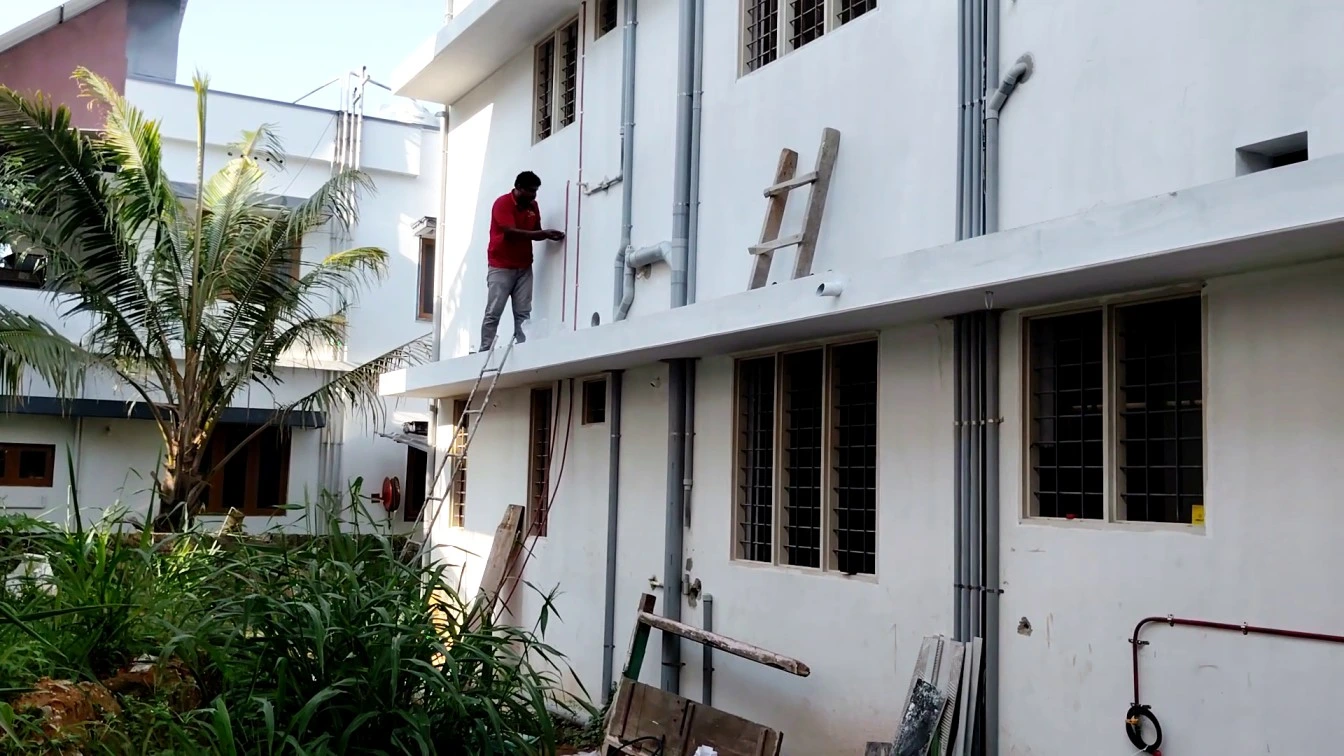
Don’t just take our word for it—see the quality of our installations for yourself. Our portfolio showcases a variety of residential and commercial projects, demonstrating our commitment to precision, safety, and a flawless finish.
Connect with Gas Care on social media.
Get a Personalized Quote
Ready to get started? We’ll be happy to schedule a free, no-obligation site visit to assess your needs and provide you with a detailed and precise quotation. ✨✨
Questions? Talk to an Expert
Have questions or need assistance? Our expert team is ready to help. Get in touch with us, and we will provide the support and information you need to make the best decision for your home.