Welcome to another technical safety audit by the engineering team at Gas Care by Stove-Technica. While we often review the latest hobs and air fryers, today we are addressing the foundational infrastructure of your kitchen. The traditional practice of storing a 14.2 kg LPG cylinder directly beneath your gas stove is an outdated, high-risk hazard. It is time to move the cylinder outside.
For decades, the standard Indian kitchen setup has involved hiding the red LPG cylinder inside a wooden modular cabinet right next to the cooking zone. From a structural and thermodynamic perspective, this is the equivalent of storing a ticking time bomb in an enclosed wooden box.
Outdoor LPG Storage & Copper Pipelines: The Ultimate Safety Upgrade
As modern homes in Kerala and across India invest heavily in premium modular interiors and high-end appliances, upgrading the gas delivery system is no longer a luxury—it is a mandatory safety requirement. Here is the unfiltered engineering reality of why you must transition to an outdoor LPG cylinder and a dedicated copper gas pipeline.
1. The Physics of LPG: Why Indoor Storage is a Hazard
To understand the danger, you must understand the fuel. Liquefied Petroleum Gas (LPG) is fundamentally different from the piped natural gas (PNG) used in some metro cities.
- The Pooling Effect: LPG is significantly heavier than air. If your indoor cylinder or its rubber tube develops a microscopic leak, the gas does not float up and out of your kitchen window. Instead, it sinks. It pools inside your enclosed wooden cabinet, filling it up like water in a bathtub.
- The Ignition Risk: Once that cabinet is saturated with leaked LPG, the slightest spark—the automatic ignition of your hob, a refrigerator compressor clicking on, or even turning on a light switch—can trigger a catastrophic, confined-space explosion.
By relocating the cylinder to the exterior of your house, any accidental gas leak immediately dissipates into the open atmosphere, completely neutralizing the risk of an indoor blast.
3 Warning Signs Your Current Gas Setup is a Hazard
If you are still using an indoor cylinder and rubber tubing, your kitchen is constantly degrading. Our Stove-Technica field engineers recommend upgrading to an outdoor pipeline immediately if you notice any of the following:
- The “Cabinet Smell”: If you open the modular cabinet door under your hob and notice a faint, stale smell of gas, you have a pooling leak. The enclosed space is trapping the gas. Do not ignite the stove.
- Hard or Brittle Tubing: Reach under your stove and squeeze the orange rubber tube. If it feels stiff, hard, or shows tiny hairline cracks near the regulator nozzle, it is chemically degrading and is on the verge of a rupture.
- Soot on Your Cookware: If your gas stove is suddenly leaving black soot on the bottom of your pans, it indicates incomplete combustion, often caused by inconsistent gas pressure from a failing indoor regulator or crimped rubber tube.
2. The Core Benefits of an Exterior Gas Pipeline
Beyond the absolute necessity of blast mitigation, installing a dedicated gas pipeline offers massive day-to-day operational advantages for the modern household.
| The Benefit | The Traditional Indoor Problem | The Gas Care Pipeline Solution |
| Space Optimization | A 14.2 kg cylinder consumes an entire modular cabinet, wasting valuable storage space right in the primary cooking zone. | Reclaims 100% of that under-counter space for heavy pots, pans, and pull-out drawers. |
| Seamless Delivery | Delivery personnel drag heavy, dirty cylinders through your pristine living room and kitchen, damaging floor tiles. | The delivery agent simply swaps the cylinder outside. They never have to enter your home. |
| Hygiene & Pest Control | The dark, inaccessible space behind an indoor cylinder becomes a breeding ground for cockroaches and rodents. | The kitchen remains sealed. Only a sleek, easy-to-clean copper pipe enters the cooking area. |
| Dual-Valve Safety | If an indoor tube catches fire, reaching past the flames to turn off the cylinder regulator is nearly impossible. | A pipeline system features a primary isolation valve outside and an emergency shut-off valve inside, directly next to the stove. |
3. The Gas Care by Stove-Technica Installation Protocol
A gas pipeline is not a DIY project, nor should it be handed over to an unqualified local plumber. At Gas Care by Stove-Technica, our pipeline installations adhere strictly to commercial-grade safety standards. Here is how we engineer a flawless system for your home:
Step 1: Site Inspection & Routing
Our technicians conduct a thorough site audit to determine the safest, most aesthetically pleasing route from your exterior utility area to your kitchen hob. We ensure the pipeline avoids electrical conduits and high-moisture zones to prevent galvanic corrosion.
Step 2: Heavy-Duty Copper Tubing
We completely discard the traditional, highly flammable rubber hosing. We utilize high-grade, thick-walled copper piping (conforming to IS standards). Copper is highly ductile, resists extreme temperatures, and is impervious to rat bites—a massive upgrade over rubber tubes.
Step 3: The Multi-Point Valve System
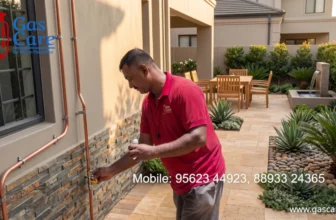
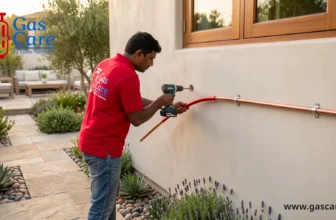
We install a commercial-grade regulator at the outdoor cylinder bank. The copper pipe then runs along your exterior wall and enters the kitchen through a precision-drilled hole. We install a high-quality brass isolation valve directly above or beside your kitchen slab. In the event of an emergency, you simply flick this valve to immediately cut the gas supply to the hob.
Step 4: Pressure Testing & Commissioning
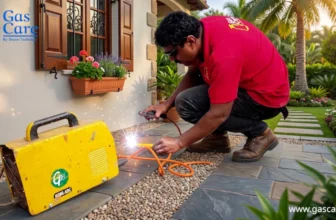
Before the system goes live, we run a high-pressure pneumatic test. We cap the ends and pressurize the copper line to ensure there are zero micro-leaks in any of the brazed joints or threaded fittings. Only after it holds pressure flawlessly do we attach the LPG cylinder and commission the stove.
4. The Financial Reality: Cost vs. Value
Many homeowners hesitate to install a pipeline, assuming it is an exorbitant expense. In reality, it is one of the most cost-effective safety upgrades you can make.
While prices vary based on the exact distance between your outdoor storage area and your kitchen, a standard Gas Care pipeline installation in 2026 typically costs between ₹5,500 to ₹8,500. This encompasses:
- High-grade copper piping (charged per meter).
- Precision brass isolation valves and commercial regulators.
- Core-cutting and professional labor.
- High-pressure leak testing.
When you consider that you are actively protecting a kitchen interior worth lakhs of rupees—and more importantly, the lives of your family—a one-time investment of ₹6,000 is statistically insignificant.
The Gas Care Emergency Protocol: What to Do During a Leak
If you are currently using an indoor cylinder and experience a severe gas leak, your immediate actions determine the safety of your home. Follow this strict protocol:
- Do Not Touch Electricals: Do not turn on the exhaust fan. Do not turn on the kitchen lights. Do not plug in or unplug any appliances. The microscopic spark inside a wall switch is enough to ignite pooled LPG.
- Ventilate Immediately: Open all kitchen windows and exterior doors to allow the heavy gas to flow out of the house.
- Isolate the Source: If it is safe to reach, turn off the cylinder regulator knob. (If you had a Gas Care pipeline, you would simply flick the indoor emergency shut-off valve away from the flame zone).
- Evacuate and Call for Help: Step outside the house and call your gas distributor’s emergency line (1906) or contact the Gas Distributor’s maintenance team for immediate assistance.
The Gas Care Expert FAQs: Safe LPG Pipeline Installations
When our Stove-Technica teams conduct site inspections across Kerala, homeowners consistently ask us about the logistics, safety, and maintenance of transitioning to an outdoor gas pipeline. Here are the most critical engineering and safety questions, answered directly by our technicians:
Q: Will the heavy Kerala monsoons and humidity rust the outdoor gas pipe?
A: This is exactly why we use high-grade copper piping instead of traditional iron or steel. Copper is highly resistant to atmospheric corrosion and oxidation, making it perfectly suited for high-humidity coastal climates. For extreme outdoor exposure, the copper lines can also be coated or sleeved to provide an additional layer of weatherproofing against heavy monsoon rain.
Q: Are copper pipelines safe from rats and pests?
A: Yes, this is one of the primary reasons to upgrade. A massive percentage of indoor gas leaks are caused by rodents chewing through the traditional orange rubber hosing behind the modular cabinets. Professional-grade copper tubing is completely impenetrable to rat bites, cockroaches, and physical abrasions.
Q: Can I connect two cylinders outside so I don’t run out of gas mid-cooking?
A: Absolutely. We highly recommend installing a dual-cylinder manifold system (often called a pigtail setup) at your outdoor storage bank. This allows you to connect both your primary and backup cylinders simultaneously. When one cylinder runs empty, you simply flip a directional brass valve outside to instantly switch to the full cylinder, without ever having to disconnect a regulator while cooking.
Q: Will installing the pipeline damage my expensive modular kitchen?
A: Not at all. A professional Gas Care installation is highly surgical. We do not need to tear down your cabinets. We use precision core-cutting tools to drill a single, clean hole through the exterior wall directly into the designated cylinder cabinet space. The copper pipe is routed discreetly, and the interior shut-off valve is mounted seamlessly near the hob for easy access.
Q: Is it safe to leave the LPG cylinder outside in the hot sun?
A: Indian LPG cylinders are manufactured using high-tensile steel and are rigorously tested to withstand extreme internal pressures and high ambient temperatures. However, as an engineering best practice, we always recommend placing the outdoor cylinder bank in a shaded, well-ventilated utility area or building a simple louvered cabinet around it. This protects the cylinder from direct, harsh sunlight and extends the life of the outdoor regulator.
Q: Does a copper gas pipeline require regular maintenance?
A: The system is incredibly low-maintenance, but not “zero-maintenance.” The copper pipe itself will last for decades. However, the brass isolation valves and the rubber O-rings inside your cylinder regulator will experience wear and tear. We advise a quick visual inspection every few months and a professional Gas Care pressure and soap-water test once a year to ensure the joints and valves remain 100% leak-proof.
People Also Ask (PAA) – LPG Gas Pipeline Installations
Is it legal to keep an LPG cylinder outside the house in India?
Yes, it is not only legal but highly recommended by all major Indian Oil Marketing Companies (Indane, HP, Bharat Gas). Storing the cylinder outdoors in a well-ventilated space strictly complies with domestic gas safety guidelines, provided it is protected from direct tampering and extreme weather.
Can we conceal the LPG copper pipe inside the wall like water pipes?
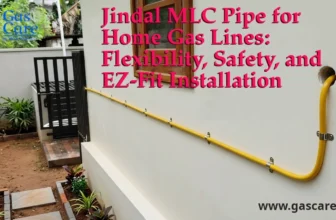
Absolutely not. Concealing a gas pipeline inside concrete or brick walls is a severe engineering and safety violation. If a micro-leak develops in a concealed joint, the gas will slowly saturate the porous concrete or find its way into wall cavities, creating a massive explosion hazard. Copper gas lines must always be surface-mounted (exposed) so that they are continuously ventilated and easily accessible for safety inspections.
What is the maximum allowed distance for a domestic gas pipeline?
While there is no strict legal maximum length for a domestic setup, the laws of fluid dynamics dictate that the longer the pipe, the more the gas pressure drops. For a standard residential kitchen, we typically run copper lines between 3 meters and 15 meters. If your outdoor cylinder bank is further away than 15 meters, our Gas Care engineers will upgrade the diameter of the copper tubing to ensure your hob receives the correct operating pressure.
Which pipe material is best for an LPG kitchen gas line?
Heavy-duty, seamless copper tubing is the undisputed gold standard for domestic LPG pipelines. It is highly ductile, withstands massive internal pressure, resists corrosion, and cannot be chewed through by pests. You should never use PVC, UPVC, or standard galvanized iron (GI) pipes for LPG, as the chemical properties of the gas will degrade the plastics and corrode the iron over time.
How do I know if my copper gas pipe is leaking?
Because copper pipes are surface-mounted, detecting a leak is straightforward. LPG is naturally odorless, but oil companies add a chemical called ethyl mercaptan to give it that distinct, foul “rotten cabbage” smell. If you smell this, or hear a faint hissing sound near a brass joint, immediately turn off the main cylinder valve outside. Never use a match or lighter to check for leaks. Call a Gas Care technician to perform a professional soap-water bubble test to locate and seal the micro-leak.
5. The Gas Care Verdict
Designing a beautiful kitchen with premium built-in hobs and red aluminum composite paneling is pointless if the fundamental infrastructure is unsafe. The traditional rubber tube and indoor cylinder setup is a relic of the past.
An exterior LPG storage bank connected via a professional-grade copper pipeline is the only acceptable standard for modern home safety. It keeps delivery dirt outside, reclaims your cabinet space, completely eliminates the risk of indoor gas pooling, and provides instant shut-off capabilities during an emergency.
If your cylinder is still sitting under your stove, it is time to upgrade your infrastructure.
Book a Gas Care Pipeline Inspection Today