
Induction Cookware for Kerala Kitchens: Appam, Puttu & Fish Curry
With the 2026 LPG shortage imposing a strict 25-day wait for cylinder refills, thousands of households across Kerala are transitioning to high-speed induction cooktops. It is the smartest way to survive the crisis and lower your utility bills.
However, this transition comes with a major hurdle: traditional Kerala cooking relies on uniquely shaped vessels. Your rounded aluminum Appachatti, the brass Puttu Kutti, and your grandmother’s earthen Meen Chatti (clay pot) will instantly trigger an “E0 Error” on a modern induction stove.
If you want to keep enjoying your daily staples while surviving the gas shortage, you need to upgrade your arsenal. Here is your complete guide to adapting traditional Kerala recipes for modern induction cooking, and the exact cookware you need to make it happen.
The Golden Rules of Induction Cooking
Before you buy a single new pot, you must understand how electromagnetic induction works. It does not generate a hot flame; instead, it uses a magnetic field to heat the vessel itself. Therefore, your cookware must meet two strict criteria:
- The Magnet Test: The base of the vessel must be magnetic. If a standard fridge magnet sticks firmly to the bottom of the pan, the induction sensor will detect it. Standard aluminum, copper, and clay will fail this test.
- The Flat Bottom Rule: The vessel must sit completely flat against the glass surface. A curved bottom (like a traditional kadai or wok) will not make enough contact to heat up, even if it is magnetic.
Replacing Your Kerala Kitchen Essentials
You do not need to abandon your favorite dishes. Here is how you can seamlessly replicate the distinct flavors and textures of Kerala cuisine using induction-compatible cookware.
1. The Appam Dilemma: Flat-Bottom Induction Appachatti
Traditional Appam requires a deep, curved center to pool the batter and create a soft, spongy middle with crispy, lace-like edges. You cannot use a round-bottom aluminum pan on an induction stove.
- The Solution: Purchase an Induction-Base Non-Stick Appachatti. These specialized pans feature a perfectly flat magnetic steel plate fused to the bottom for the stove to detect, while the inside remains deeply curved to give you the perfect Appam shape.
- Pro Tip: Use the lower temperature settings (around 800W) to prevent the Appam edges from burning, as induction heats up much faster than an open LPG flame.
2. Steaming Puttu: The Pressure Cooker Hack
The traditional brass or aluminum Puttu Kutti placed over a water-filled pot is a staple for Kerala breakfasts. If your current set is purely aluminum, it is obsolete on an induction stove.
- The Solution: You have two options. You can invest in a pure Stainless Steel Induction Puttu Maker. Alternatively (and more economically), buy a heavy-duty Induction-Base Stainless Steel Pressure Cooker and pair it with a standard Puttu maker attachment that sits directly on the cooker’s steam vent.
- Pro Tip: This method actually steams the Puttu faster because induction boils the water inside the pressure cooker in less than 4 minutes!
3. Authentic Meen Curry (Fish Curry): Cast Iron vs. Clay
Every Malayali knows that fish curry tastes best when simmered in a traditional earthen Meen Chatti. Unfortunately, clay has zero magnetic properties and will not work on induction.
- The Solution: The closest substitute for heat retention and flavor development is a Heavy Cast Iron Kadai with a flat base. Cast iron is naturally magnetic, holds heat brilliantly, and imparts a rich flavor to tamarind and coconut-based gravies.
- The Infrared Workaround: If you absolutely refuse to give up your clay pots, do not buy an induction cooktop. Instead, buy an Infrared Electric Stove. Infrared uses radiant heat coils beneath the glass, meaning it can safely heat your traditional earthen clay pots just like a gas stove!
4. Crispy Dosa & Kallappam: The Heavy Cast Iron Tawa
While a lightweight non-stick induction tawa works for quick tasks, it lacks the thermal mass required to make a perfectly golden, crispy Ghee Roast dosa.
- The Solution: Upgrade to a Pre-Seasoned Cast Iron Flat Tawa. Because cast iron is highly magnetic, it absorbs the electromagnetic energy perfectly, distributing heat evenly across the entire surface without the “hot spots” common on cheap aluminum pans.
Quick Reference: Cookware Compatibility Table
| Traditional Kerala Vessel | Works on Induction? | The Best Induction Alternative |
| Aluminum Appachatti | ❌ No | Induction-Base Non-Stick Appachatti |
| Brass Puttu Kutti | ❌ No | Stainless Steel Puttu Maker / Pressure Cooker |
| Clay Meen Chatti | ❌ No | Flat-Bottom Cast Iron Kadai (Or use Infrared) |
| Aluminum Pressure Cooker | ❌ No | Induction-Base Stainless Steel Cooker |
| Cast Iron Dosa Kallu | ✅ Yes | (Ensure the bottom is completely flat) |
Future-Proof Your Kitchen Today
The 2026 LPG shortage has taught us that relying entirely on traditional gas cooking leaves our homes vulnerable. Upgrading to a hybrid kitchen does not mean abandoning your culinary heritage; it simply means adapting it to smarter, faster, and more efficient technology.
Ready to upgrade your cookware arsenal? Browse our curated collection of authentic, induction-ready Appachattis, Puttu makers, and heavy-duty cast iron tawas in the Gas Care Shop today.
The Reality Check: Pros and Cons of Making Appam & Puttu on Induction
Transitioning your traditional Kerala breakfast routine to an electric stove comes with distinct advantages, but it also requires a slight learning curve. Here is a transparent look at what you can expect when you swap your gas flame for electromagnetic heat.
The Pros: Why You Will Love It
- Blistering Speed for Steaming: Induction boils water incredibly fast. When making Puttu using an induction-base pressure cooker, the steam builds up in half the time it takes on a standard LPG stove, saving you crucial minutes during busy mornings.
- Precision Heat Control: Making the perfect Appam requires a delicate balance of heat so the center cooks through without burning the lacey edges. Induction allows you to lock in the exact wattage (e.g., a steady 800W) so every single Appam comes out perfectly golden.
- A Cooler Kitchen: Traditional gas stoves lose about 60% of their heat to the surrounding air, making your kitchen unbearably hot during the humid Kerala summers. Induction transfers heat directly to the pan, keeping your kitchen significantly cooler.
- Cost Efficiency: With the current 25-day wait for LPG refills and rising black-market cylinder prices, running a 2000W induction stove for daily breakfast tasks is substantially cheaper.
The Cons: The Adjustments You Must Make
- The Initial Cookware Investment: You cannot use your grandmother’s brass Puttu Kutti or your lightweight aluminum Appachatti. You will need to purchase specific, flat-bottomed, induction-ready cookware.
- The “Too Fast” Learning Curve: Because induction heats the metal directly and instantly, pans get hot much faster than you are used to. If you put an empty Appachatti on a high setting (2000W) while you pour the batter, the non-stick coating can warp or burn. You must learn to start on medium heat.
- Power Cut Dependency: Unlike a gas cylinder, your ability to make breakfast is tied to the electrical grid. A heavy-duty induction stove cannot be run on a standard home inverter during load shedding.
Head-to-Head: Gas Stove vs. Induction for Kerala Breakfasts
To help you decide if making the switch is right for your daily routine, here is how induction stacks up against traditional LPG for making staples like Appam and Puttu.
| Feature | Traditional Gas Stove | Induction Cooktop |
| Heating Speed | Standard (Slower to boil water for Puttu) | Extremely Fast (Boils water in minutes) |
| Temperature Control | Visual (Requires adjusting the flame manually) | Precise (Exact wattage/temperature locks) |
| Cookware Flexibility | Works with any curved, clay, or brass vessel | Requires flat-bottom, magnetic cookware |
| Energy Efficiency | ~40% (Lots of heat escapes into the kitchen) | ~85% (Heat goes directly into the food) |
| Safety | Open flame risk; gas leak potential | No open flame; auto-cut off features |
| Current Availability | Subject to 25-day refill delays and shortages | Available 24/7 (Dependent on power grid) |
Frequently Asked Questions (FAQ) – Kerala Cooking on Electric Stoves
Q: How can I make Appam on an induction stove if the pan needs to be curved?
A: You cannot use a traditional round-bottom aluminum Appachatti on an induction cooktop because the sensor requires a flat surface to activate. To make perfect Appam without gas, you need to buy a specialized Induction-Base Appachatti. These pans are uniquely designed with a flat, magnetic steel plate on the outside to connect with the stove, while the inside remains deeply curved for the batter to pool perfectly.
Q: Can I use my traditional clay Meen Chatti on an induction cooktop?
A: No, earthen clay pots will not work on an induction stove because clay has zero magnetic properties. If you want to cook authentic fish curry on an induction stove, a flat-bottom cast iron kadai is your best alternative for heat retention. However, if you refuse to give up your clay pots, you should purchase an infrared electric stove instead, which uses radiant heat and works perfectly with flat-bottomed clay vessels.
Q: How do I make Puttu without a gas stove?
A: You have two easy options for making Puttu on an induction cooktop. You can buy a dedicated stainless steel induction-compatible Puttu Kutti. Alternatively, you can use the popular Kerala kitchen hack: buy an induction-base stainless steel pressure cooker and place a standard Puttu maker attachment directly over the cooker’s steam vent. It actually steams the Puttu faster than a traditional gas setup!
Q: Why does my induction stove beep and show an E0 error when I put my old aluminum cooker on it?
A: The flashing E0 error code means your induction cooktop cannot detect a magnetic base. Standard aluminum and copper-bottomed vessels are not magnetic and will not heat up. To fix this, simply upgrade your kitchen with an induction-compatible stainless steel pressure cooker.
Q: Which Dosa tawa is best for getting crispy dosas on an induction cooktop?
A: While lightweight non-stick pans work, the absolute best option for a crispy, golden Ghee Roast dosa is a heavy, flat-bottom pre-seasoned cast iron tawa. Cast iron is naturally highly magnetic, meaning it absorbs the induction heat brilliantly and distributes it evenly without the hot spots that ruin dosas.
Q: Is there any electric stove that works with all my old Kerala utensils?
A: Yes! If you want to switch to electric cooking but do not want to throw away your old aluminum pressure cookers, brass vessels, or clay pots, you should buy an infrared cooktop. Unlike induction (which requires magnetic flat bottoms), infrared uses glowing heat coils under the glass, meaning it works with almost any flat-bottomed utensil you already own.
Q: Is it safe to use a steel converter plate under my old aluminum Appachatti?
A: No, using a magnetic steel “converter disk” between the induction glass and your old aluminum pan is highly discouraged. It causes severe heat buildup that can permanently damage the motherboard of your cooktop or even shatter the crystal glass. It is much safer and more energy-efficient to simply buy the proper induction-base cookware.
People Also Ask: Troubleshooting Kerala Dishes on Electric Stoves
How can I tell if my existing kitchen vessels will work on an induction stove?
The easiest way to check your cookware is by performing the “Magnet Test.” Take a standard fridge magnet and place it against the bottom of your pan. If the magnet sticks firmly, the vessel is induction-compatible. If it does not stick—which is the case for traditional aluminum, copper-bottom, and clay pots—the stove will not detect it and will flash an “E0” error.
Why do my dosas keep burning or sticking on my new induction cooktop?
Induction technology transfers heat incredibly fast. If you are using a thin, lightweight non-stick tawa, it will develop intense hot spots almost immediately, causing the dosa batter to burn in the center while remaining raw on the edges. To fix this, upgrade to a heavy, pre-seasoned cast iron Dosa Kallu and lower your stove’s power setting to medium (around 800W–1000W) for an even, golden roast.
Can I safely deep fry snacks like Pazham Pori on an induction stove?
Yes, deep frying is highly efficient and actually safer on an induction cooktop because there is no open flame to ignite accidental oil splatters. Use a flat-bottomed induction kadai and select the “Deep Fry” preset if your model has one. The stove will automatically regulate the temperature, preventing the oil from overheating and burning your snacks.
Is it safe to place my traditional clay Meen Chatti on an infrared glass stove?
While you cannot use clay on an induction stove, an infrared electric stove uses radiant heat coils that safely warm up earthen clay pots. However, traditional clay pots often have rough, unpolished bottoms. To protect your investment, always place the Meen Chatti gently onto the heating zone and never drag or slide it across the surface, as this will permanently scratch the crystal glass.
Does cooking daily Kerala meals on an induction stove consume a lot of electricity?
A common myth is that a 2000W appliance will cause a massive spike in your electricity bill. Because induction is highly energy-efficient (transferring heat directly to the pan with zero heat loss in the air), cooking takes significantly less time. For a standard family cooking three meals a day, the electricity cost is generally much lower than purchasing non-subsidized LPG cylinders on the black market.
Keep Your Kitchen Running: Upgrade Your Kerala Cookware Today
The ongoing LPG shortage doesn’t have to mean the end of your family’s favorite Sunday Appam and stew or your morning Puttu. By equipping your kitchen with the right flat-bottomed, induction-ready vessels, you can seamlessly transition to fast, energy-efficient electric cooking without sacrificing an ounce of authentic flavor.
Stop guessing which pans will pass the “Magnet Test” at the local market, and avoid those frustrating E0 error codes. We have already done the hard work of testing and finding the absolute best induction-compatible cookware for traditional Kerala recipes.
Make the one-time investment today to future-proof your kitchen, lower your energy bills, and beat the 25-day cylinder wait!
[Shop Top-Rated Induction Appachattis & Cookware on Amazon India]
Induction compatible Cookware: Today’s Top Deals

Prestige 16cm/1.5L Tri-Ply Stainless Steel Splendid Sauce Pan with Lid|Gas and Induction Compatible|Even Heat Distribution| Thick Gauge Tri-Ply…
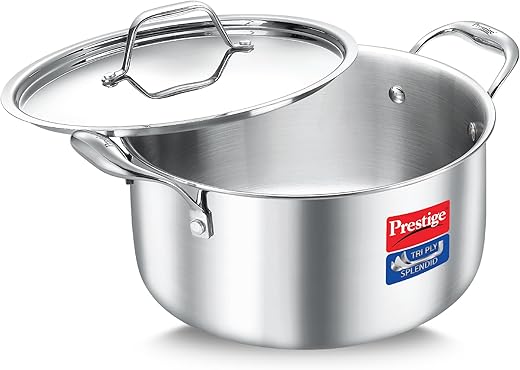
Prestige 18m/2.0L Tri-Ply Stainless Steel Splendid Casserole| Gas and Induction Compatible |Even Heat Distribution| Thick Gauge Tri-Ply Body| Perma…

Jupiter Enterprises – Gas Stove On/Off Knobs Push Button Fits for All Type of Butterfly/Prestige Gas stoves(Blacktop/Stainless Gas stoves)-4 Units

The Indus Valley Triply Stainless Steel 5 Litre Pressure Cooker/Pressure Pan – Outer Lid | Also Use As Deep Fry Pan | Induction Friendly |…

Prestige 3 Litre Aluminium Nakshatra+ Svachh Innerlid Pressure Cooker Handi|Deep lid for spillage control|Virgin Aluminium|Induction…

Amazon Brand – Solimo – Sleek Induction Bottom Aluminium Pressure Cooker – 2 Liter (Inner Lid), Silver

Prestige 2 Litre Aluminium Popular Plus Svachh Outerlid Pressure Cooker|Deep Lid for spillage Control|Virgin Aluminium|Gas & Induction…

Lifelong Stainless Steel Curve Pressure Cooker 5Liters | Induction & Gas Stove Compatible with Outer Lid, ISI Certified & Lock System | Safe &…

Prestige 5 Litres Nakshatra Alpha Induction Base Inner Lid Stainless Steel Pressure Cooker |Silver | Metallic Safety Plug | Durable Handles |…
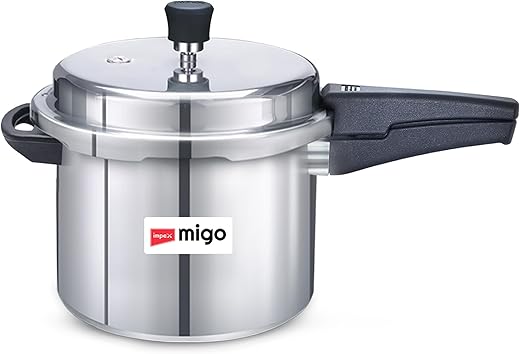
Impex 5 Litre Aluminium Pressure Cooker With Outer Lid | Induction And Gas Stove Compatible Pressure Cooker For Healthy Cooking | ISI Certified | 5…
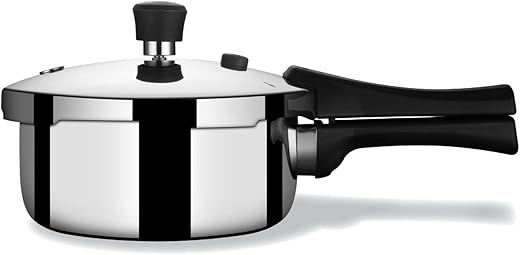
Stahl Xpress Cooker Triply Pressure Cooker Broad, Induction Cooker, Outer Lid pressure cooker 2.5 L, Induction & Gas Stove Compatible, 5 Years…

Prestige 3 Litre Aluminium Nakshatra Duo Inner Lid Pressure Cooker | Stainless Steel Lid | Handi | Deep Lid for Spillage Control | Anti-Bulge Base…

Hawkins 1.5 Litre Contura Black XT Pressure Cooker, Small Induction Cooker, Extra Thick Handi Cooker, Black (CXT15)

Pigeon by Stove Kraft 3 Litre Special Plus Aluminium Inner Lid Induction Base Pressure Cooker (Silver) BIS Certified

Butterfly Curve 3 Litres Pressure Cooker | Outer Lid | Stainless Steel | Induction & Gas Stove Compatible | ISI Certified | 5 Years Manufacturer’s…

Pigeon By Stovekraft 12260 Induction Base Outer Lid Aluminium Pressure Cooker, 3Liters, Silver

Pigeon by Stovekraft Hard Anodised Aluminium Inner Lid Cooker – 3 Litre with Induction Base, Silver, medium (14547)

TRAMONTINA Titanex 26 cm Pre-Seasoned Cast Iron Paniyaram | Appe Pan – 12 Pits | Non-Toxic | Induction Ready | Toughned Glass Lid | Snap-on Cool…
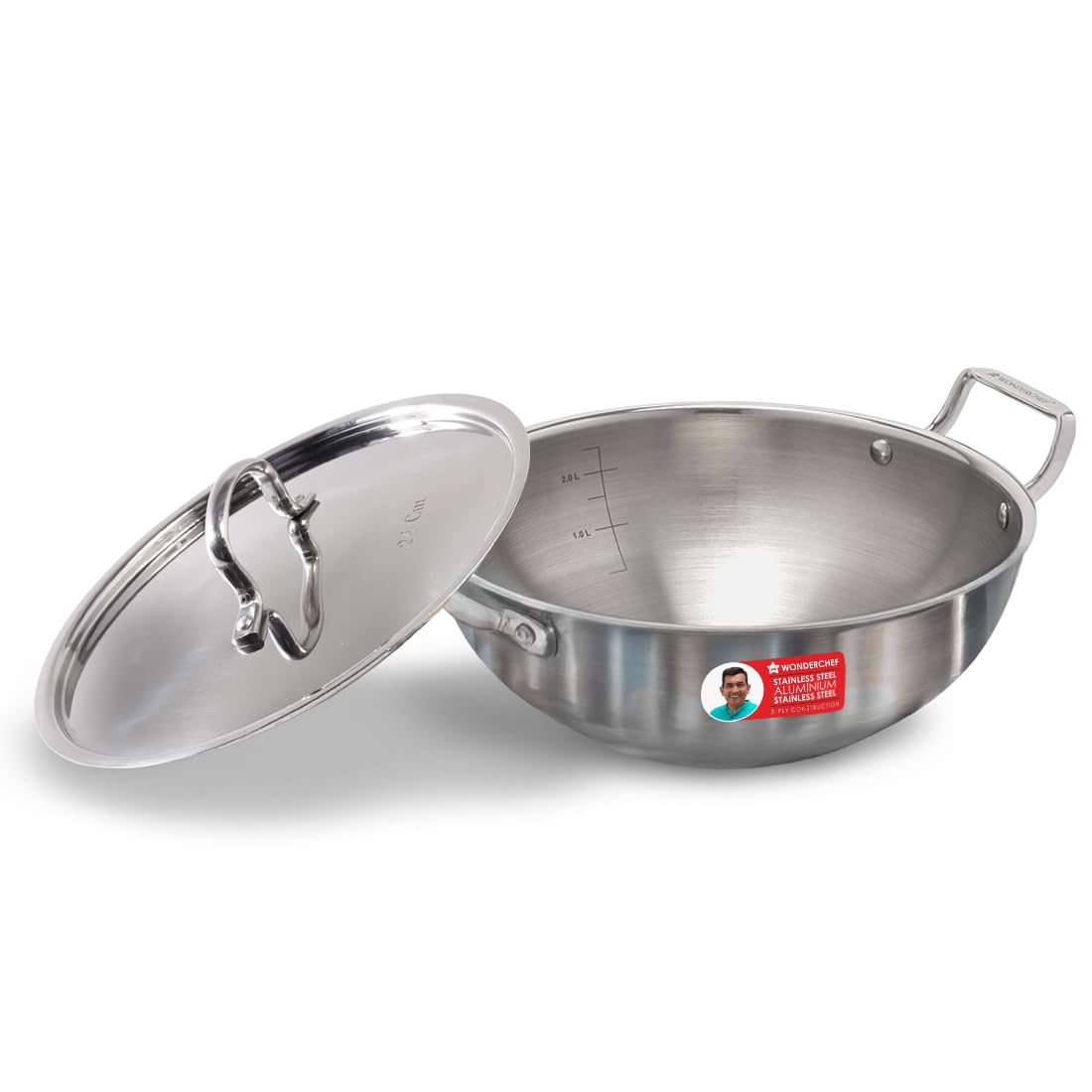
Wonderchef Stella Triply Stainless Steel Kadhai with Lid | 24 cm, 3 litres | Compatible with Gas Stove, Induction, Ceramic Cooktop | Non-Toxic |…


Prestige 28cm/4.25L Tri-Ply Stainless Steel Splendor Kadai with Lid| Gas & Induction Compatible| Even Heat Distribution| Strong and Durable|…

Futura Hard Anodised Ezee-Pour Saucepan 1 Litre Without lid

Hawkins Futura 1.5 Litre Saucepan, Hard Anodised Sauce Pan, Cooking Pot with Long Handle, Black (AS15)
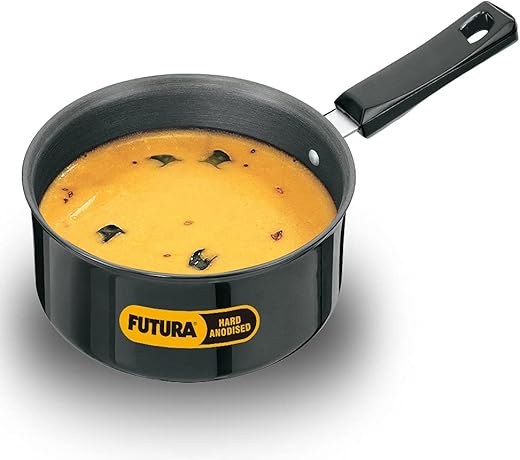
Futura Hard Anodised Saucepan 2.25 L, 18 cm, 3.25 mm

Hawkins Stainless Steel Futura 2 Litre Saucepan, Hard Anodized Sauce Pan, Induction Saucepan, Small Sauce Pan, Black (IAS20)
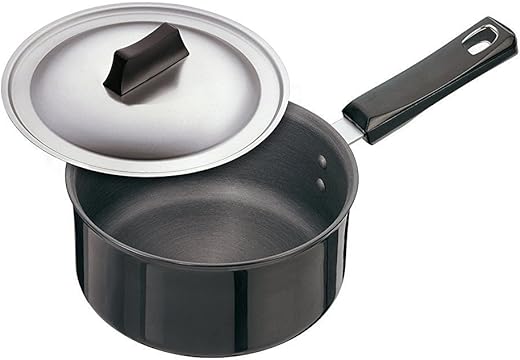
Hawkins Futura 2.25 Litre Saucepan, Hard Anodised Sauce Pan with Stainless Steel Lid, Cooking Pot with Long Handle, Black (AS225S)

Futura Hard Anodised Ezee Pour Saucepan 2L, 18 cm, 3.25 mm with SS Lid and Induction Compatible Base
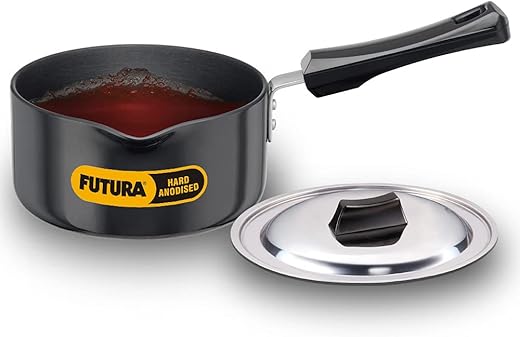
Futura Hard Anodised Saucepan 1.5L, 16 cm, 3.25 mm with SS Lid

Prestige Ceraglide Duo Frypan 18Cm/0.8L Non-Stick Ceramic Coating|Works On Gas & Induction|High Heating|Cool Touch Handle|Grey